The General Society of Mayflower Descendants keeps a page for people who suspect they qualify. Online trees are a fine place to start, it says, but earlier tree builders did not check every link, so "beware the child born before his parents or the daughter born to a five-year-old mother!" The advice that follows fits in one line: "use online resources as clues, not proof".
A lineage society application is the strictest review most family trees will ever get. Someone at the society checks every generation between you and the qualifying ancestor, and a link that rests on a stranger's tree comes back to you. So the useful question is which society your documents can reach, however famous its founder.
Each society is a proof standard with a membership attached.
Lineage societies, also called hereditary societies, admit people who can prove direct descent from a particular kind of ancestor: a Revolutionary War patriot, a Mayflower passenger, an early settler of one state. The Hereditary Society Community keeps an alphabetical directory of active ones. The qualifying ancestor changes from society to society. The job does not. You need a documented parent-and-child link for every generation, from you back to that person.
Count the links before you pick the ancestor.
The size of an application is the number of generations you have to prove. At 25 to 30 years a generation, a patriot born around 1750 sits eight to ten generations above someone born around 1990, and a Mayflower passenger born around 1600 sits thirteen to sixteen above them. Every one of those links needs a record that ties a child to a parent.
Some societies ask for far fewer. The Ohio Genealogical Society runs five lineage societies that reach from the frontier to living memory. First Families of Ohio is for descendants of someone who settled there between 1803 and 1820. Century Families of Ohio is open to descendants of anyone living in Ohio from 1861 to 100 years before the current year, so in 2026 an ancestor who lived there in 1926, often a great-grandparent, can be enough. You have to be an OGS member when you submit. If your family stayed put in one state for a century, look at that state's genealogical society before you aim at a national one.
Patriotic service is wider than a musket.
For a Revolutionary War ancestor, the Daughters of the American Revolution admits any woman 18 or older who can prove lineal descent from a patriot, and the Sons of the American Revolution admits men on a similar basis. DAR's list of accepted service runs well past soldiers. It counts town and county officials such as jurors, constables and surveyors of highways, people who signed an oath of allegiance, doctors and nurses who treated the wounded, ministers who preached patriotic sermons, and anyone who furnished supplies or lent money. In states that raised special supply taxes, paying the tax counts too. The service generally has to fall between 19 April 1775 and 26 November 1783.
That changes where you look. An ancestor who never carried a gun may still qualify, and the proof of service may be a tax list or a town meeting record rather than a muster roll.
Someone may have proved most of your line already.
Before you order a single certificate, find out where your line meets one a society has already accepted. DAR's Genealogical Research System is free to search and has a section of record copies of previously verified membership applications. The Mayflower Society publishes the Silver Books, which follow each passenger's family down five or six generations, and its Mayflower Lineage Match compares a proposed line against those books and previously approved applications. It costs $100 per proposed line, rebated in full if you join, and it covers the 51 passengers known to have had children.
If your line joins a proven one, most of the remaining work sits between you and the join. Those are usually the recent generations, and recent records tend to be easier to get.
Wives without maiden names are the hardest links to prove.
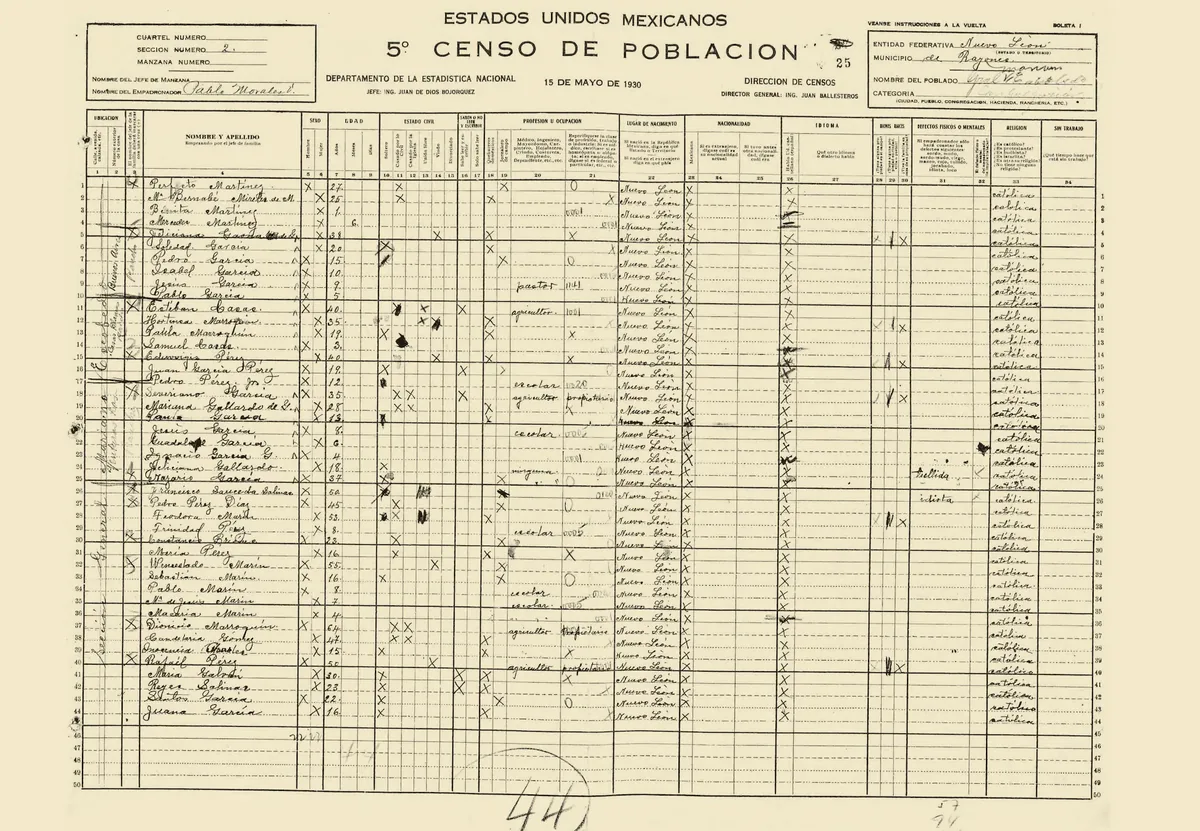
The Mayflower page names the problem itself. Confirming each link is "especially challenging for women whose maiden names were not recorded on Census records or other documents". A wife who appears in a census by her first name only needs another record to tie her to her father: a marriage bond, a probate file, a child's death certificate. Our guide to finding a maiden name in old records goes through where those survive.
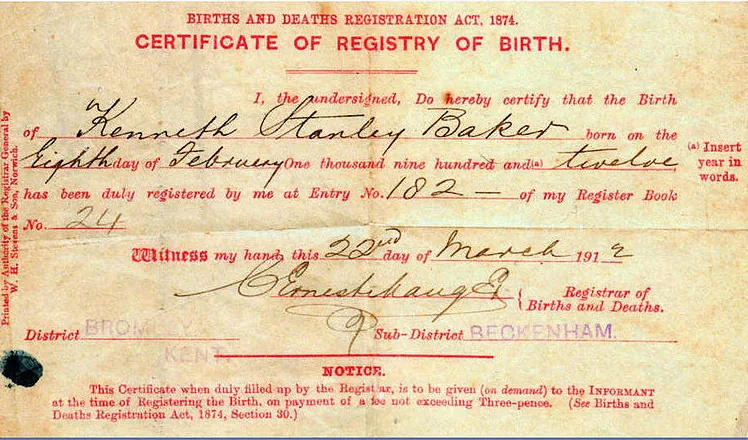
Printed sources need the same caution. County histories and compiled family genealogies can point you to the right family, but the society warns that "not all are acceptable and each must be reviewed carefully". One saving: for Mayflower purposes you do not need certified copies of vital records. Copies marked informational or for genealogical purposes are accepted, and they may cost less.
DNA can support a link, but it never replaces paper.
DAR has accepted Y-DNA evidence in support of applications since 2014, but "Y-DNA will not be considered as stand-alone proof of lineage", and it needs results from at least two test subjects alongside the paper. Since July 2020 DAR has also taken autosomal DNA, only where documents are missing in the first three generations: the applicant, her parents and her grandparents. A missing link in 1810 still needs documents.
Check your tree before a registrar does.
Run the Mayflower Society's own warning against your line first. For each generation, work out how old the mother was when each child was born. Our genealogy date calculator will work out her age at each birth from the two dates. A mother aged five, or a child born years after its mother died, usually means a wrong link or two people merged into one, though a misread date can do it too. Check the original record before you trust either reading.
Then write one line per generation naming the record that proves that child belongs to that parent. Wherever a line says "family tree" or "family story", you have found the generation to research. Our piece on sources you can trust covers how to weigh one record against another when two of them disagree.
Only then pick the society, starting from the nearest qualifying ancestor whose every link you can document. A finished Century Families application teaches you more about your family than a Mayflower application stalled at a great-great-grandmother with no maiden name.