Let us get the myth out of the way quickly, because it has been debunked so many times that another debunking is no use to you. No clerk at Ellis Island renamed your great-grandfather. Inspectors did not write names down at all. They sat at a desk in the Registry Room with a manifest that had been typed up by the steamship company before the ship left Europe, and their job was to check the answers in front of them against the list they already had.
That fact is usually presented as a correction. It is more useful as a research lead. If the passenger list was written at the port of departure, then the name on it is the name your family used at home, in the spelling a clerk in Hamburg or Naples or Bremen thought was right. The arrival record is not where the name changed. It is the last document that has the old name in it.
Search the manifest for the old spelling, not the new one.
This is where most searches fail before they start. Someone types the American surname into a passenger-list index, finds nothing, and concludes the record was lost or the name was changed on arrival. The record is usually there under an old-world spelling that looks nothing like what the family answers to now. Work outward from sound rather than letters: the vowel that got flattened, the consonant that has no English equivalent, the ending that got dropped. Our guide to ancestor name spelling variants covers the systematic version of that, and it matters more on a manifest than on any other record, because the person writing it was often working from speech in a language they did not share.
Two other things on that page are worth as much as the name. The manifest lists a last place of residence and, on later forms, the name and address of a relative back home. Those two fields are what turn a surname into a village, and a village is what makes the European records searchable.
The change itself usually happened slowly, at a kitchen table.
The real answer to when the name changed is unsatisfying: over years, without a single document marking it, in the direction of whatever was easier to say at work. That is why the search is hard. USCIS, which holds the records, lists a whole set of ordinary reasons a name in a record fails to match the name you expect. Some are deliberate, like an anglicized spelling adopted to get hired. Most are clerical: a misspelling that stuck, a nickname recorded as a legal name, a stepfather's surname written where the natural father's belonged, a mother's maiden name used instead of the father's surname. None of those produce a name-change certificate. They produce a trail of records that disagree with each other, which is a different research problem and a solvable one.
September 1906 is the date that divides the paperwork.
Before then, naturalization was handled by whichever court was nearest and the forms were whatever that court happened to use, so the surviving record is often two lines in a ledger. The Basic Naturalization Act changed that on 27 September 1906: from that day every court in the country used the same three forms, the Declaration of Intention, the Petition for Naturalization, and the Certificate of Naturalization. The standardized versions ask for date and place of birth and the port and date of arrival, which is exactly the bridge you need between an American record and a manifest.
The practical consequence is blunt. Documentation of a name change in the naturalization process has only been required since 1906. If your ancestor naturalized before that, the paperwork was never obliged to mention the old name, and the only immigrants who left a formal record are the ones who went to court specifically to change it.
For 1906 to 1956, ask for the C-File and turn the certificate over.
A naturalization completed between 27 September 1906 and 31 March 1956 generated a Certificate File, the C-File, held by USCIS rather than by the court. A basic one holds all three forms together, which is already more than most researchers realize is available. The detail worth knowing: when the petition does not clearly show the name change, the notation is frequently on the back of the certificate. People request a C-File, read the three front pages, find no name change, and stop one page early.
A court-ordered change lives with the county, not the federal government.
This is the other place people look in the wrong building. Anyone over twenty-one could petition a county-level court to order a name change, and that order was recorded by the county clerk where the person lived, not in any federal immigration file. So the question to answer first is not what to request but where the family was living in the year you think the name settled. City directories and the census will tell you the county; the county clerk's office holds the order. If the family moved twice in that decade, that is two clerks to write to.
Some records carry both names at once, and those are the ones to hunt.
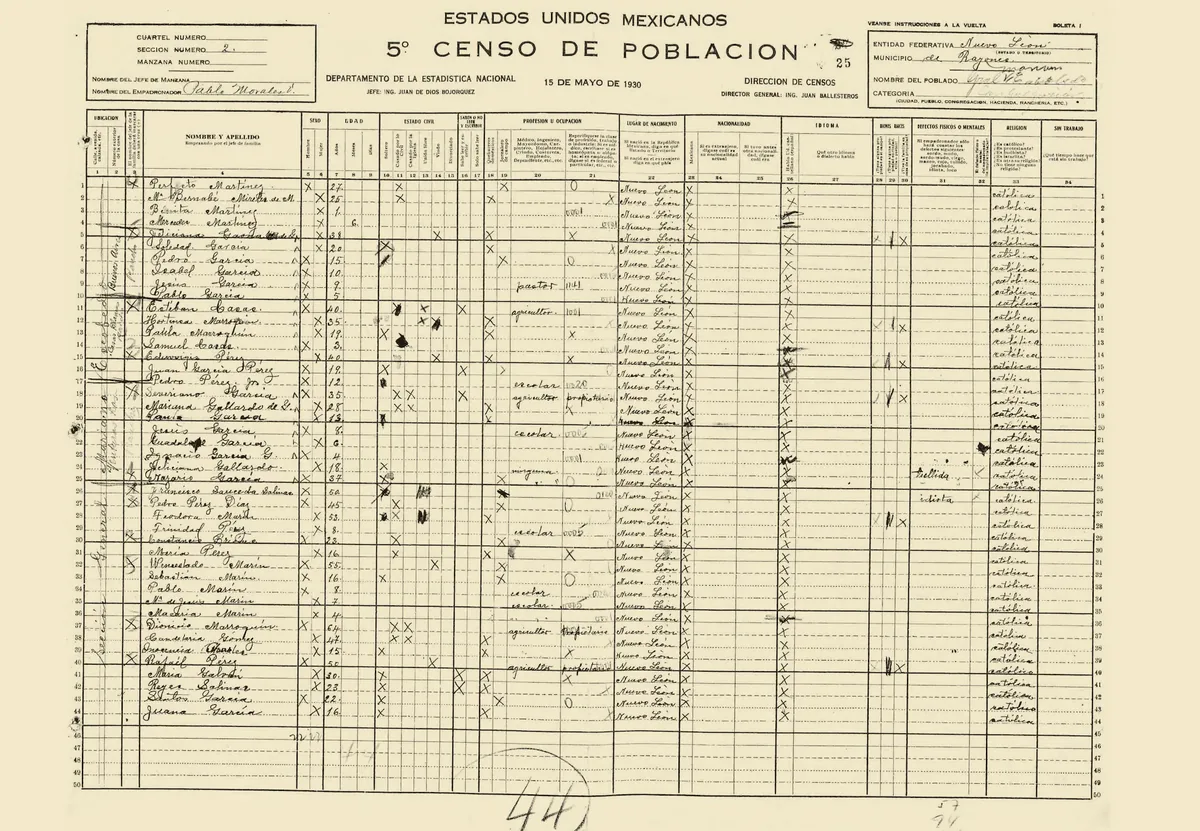
A name change with no paperwork can still be pinned down, because the transition period leaves documents that hold the old name and the new one on the same page. Marriage licenses are the reliable ones: the bride and groom give their parents' names, and parents are a generation slower to anglicize. Pension files often carry an "also known as" line on the index card. A sibling's or a cousin's death certificate can hold the version your own line abandoned, which is why a stalled search on one person is often solved from another. Newspapers help for the same reason, and so does the census, where an enumerator writing by ear across two decades can hand you the whole drift in four spellings. There is a technique for reading those pages against each other in our post on reading between the census lines.
One caution on given names, since it derails this search constantly. A first name that looks changed often was not. Households used a pet name, and clerks wrote down whatever the family said, so the Mary on a birth record and the Polly on a census page are frequently one person. Check the nickname finder before you conclude that a given name was altered, and apply the same suspicion to a woman's surname: what looks like a changed family name is sometimes a maiden name, which is its own search with its own method in our guide to finding a maiden name.
Write down the version of the name each record actually says.
The habit that shortens this search is recording spellings rather than resolving them. Keep every variant you encounter with the record it came from and the year, and stop trying to decide which one is correct. There is often no correct one. A family can have used three spellings in the same decade, and the value is in the sequence, because it tells you which spelling to search for in which years. Deciding early that one version is the real name is how researchers spend a winter searching an index for a spelling their family had already stopped using.
The name was not taken from your family by a stranger at a desk. It moved, over a couple of decades, in small steps that each made sense at the time. Every one of those steps happened somewhere that kept paper.