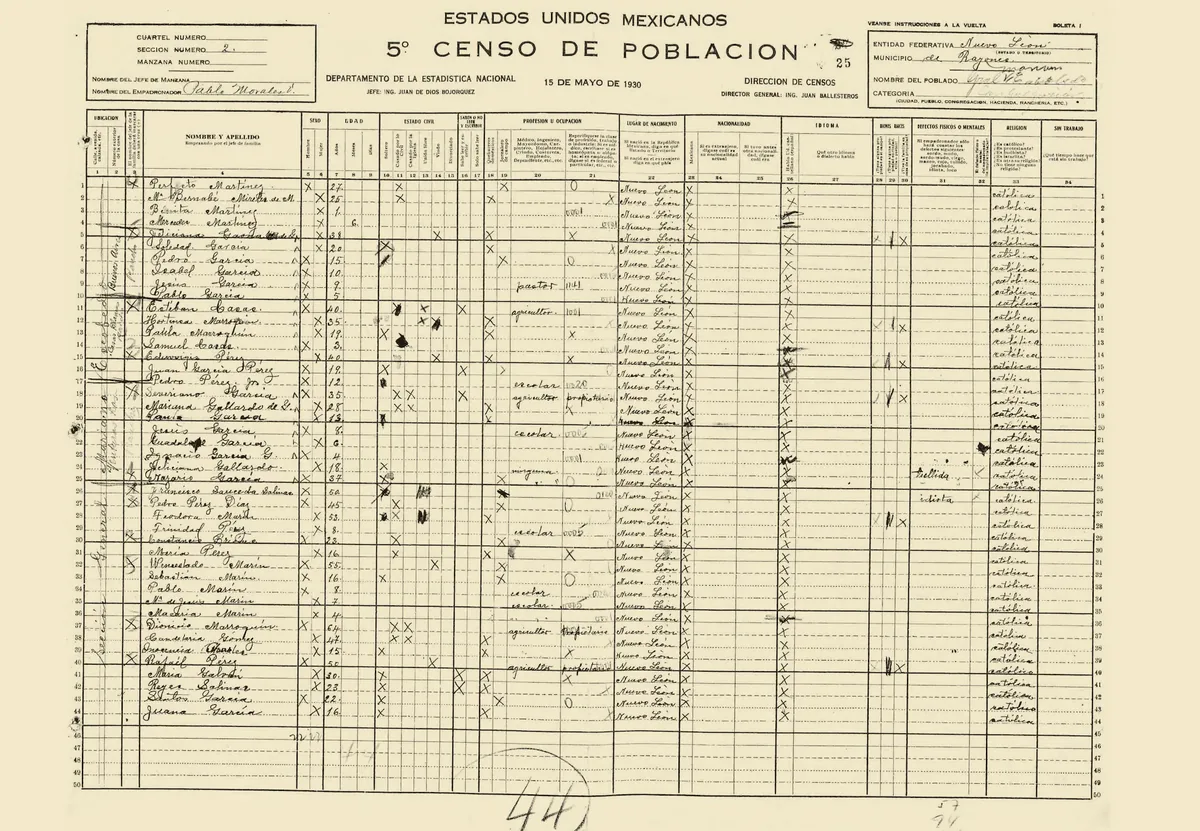
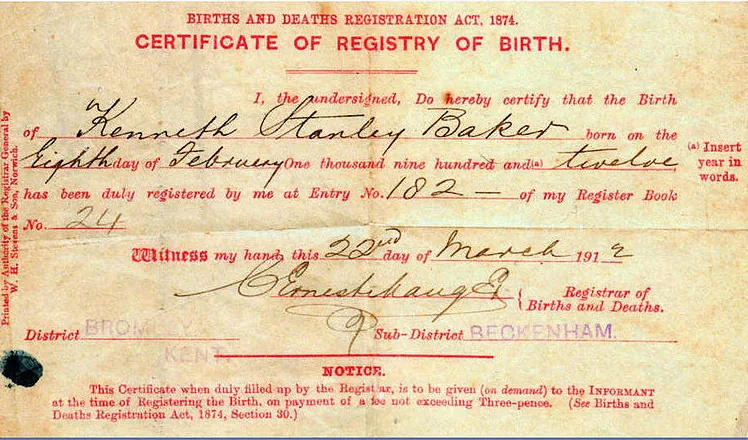
Search for a Transkribus review and you find archivists talking to archivists. The American Archivist's reviews portal. A Byzantine studies blog. Oxford's History of the Book. A systematic review in Archival Science that coded 381 academic papers. All of it careful, none of it written for the person we keep meeting: someone holding one photographed page of a parish register who cannot read a single word on it. So here is Transkribus judged on that page, rather than on a ten-thousand-page digitisation project.
It is a handwriting engine, and nothing else.
Upload a page image. Transkribus finds the text lines, runs a recognition model across the handwriting, and hands you text you can search and export as PDF or Word (plain text and the archival XML formats need a paid plan). That is the product. It holds no records, has no family tree, and knows nothing about your ancestors.
The engine came out of university research, not a startup. It began in 2013 inside the EU-funded TranScriptorium project, opened to the public in 2015, and scaled under the Horizon 2020 READ project from 2016. When the grant money ran out they incorporated as a cooperative instead of raising investment: READ-COOP SCE, founded in 2019 in Innsbruck, owned by its members, not shareholders, with profits going back into the models. By its own account membership runs to more than 250 universities, archives, libraries and individuals across more than 35 countries, and usage to above 500,000 people and 200 million pages.
The free tier is 50 pages a month, and it withholds the good model.
Fifty credits a month. No credit card. One credit buys one page of handwriting recognition. Fifty pages is genuinely enough for a hobbyist, so the page count is not the catch. The catch is that Transkribus's own plan comparison marks its Super Models, the Text Titan family included, as unavailable on the free plan.
That matters, because Text Titan is most of the reason to use Transkribus at all. Text Titan II arrived on 25 June 2026 trained on more than 250 million words, and Transkribus puts its character error rate about 47% below Text Titan I across Latin scripts, on what it calls an early version still in training. Free accounts run the public models instead, of which there are a few hundred, and choosing the right one for your century and language is on you. Free also drops table recognition, field recognition, mixed scripts inside a single document, and every export format except the basic ones. You get 20 GB of storage, five training runs a month, and the slow queue.
If you upgrade, do the arithmetic first. Scholar is €99 a year for 900 credits, or €19.99 a month for 150 credits a month. Both include 20% Austrian VAT, so what you actually pay depends on your country. Annual works out near 11 euro cents a page. Top-up packs run 250 credits for €59.50, closer to 24 euro cents a page, and those never expire, while subscription credits die with the billing period. Line detection is billed on its own at a quarter of a credit per page. The Team and Organisation plans are priced for departments, not for you.
Against a chatbot, the answer depends on the language.
Two head-to-head benchmarks disagree, which is more useful than either alone. Transkribus ran its own across a 2,000-page sample in 13 languages: Text Titan I ter scored a 10.8% character error rate on handwriting against 35.0% for the best chatbot on that half of the test, Gemini 2.5 Flash. On print, 3.9% against 10.2% for Gemini 2.5 Pro. One caveat belongs with those numbers. When a model refused to transcribe a page, the refusal was scored as 100% error, and that flatters the gap.
The independent figure is much narrower and points the other way. Humphries and colleagues at Wilfrid Laurier University tested 50 pages of English letters, diaries and legal documents written between 1761 and 1827 in 33 different hands. Claude Sonnet 3.5 came in at 7.3% CER, Transkribus Titan at 8.0%, Gemini 1.5 Pro at 8.5%, GPT-4o at 11.0%. On English a general chatbot narrowly won on accuracy, and lopsidedly on the rest: the same authors clock the chatbots at roughly fifty times faster and about a fiftieth of the cost per page. Both sides used 2024-era models, so read the accuracy ranking as close, not settled.
Our read: if your page is English in a reasonably common hand, a chatbot is competitive, cheaper and faster. If it is German Kurrent, Sütterlin, or a page that mixes scripts, Transkribus is doing something a general model has barely been trained for. What a chatbot will not do is map each word back to its position on the page, which is what turns a long file into something searchable. Its failure modes are worse, too: handed a hand it cannot read, it will either refuse the page outright or invent a line instead of flagging the one that beat it. That second habit is what we wrote up in why ChatGPT can't do genealogy, with the practical workarounds in our ChatGPT for genealogy guide.
Training your own model is where a hobbyist gets off the bus.
Custom training sits on the free plan, five runs a month, and you can ignore it. Transkribus asks for 25 to 50 transcribed pages to begin, which in word terms is about 5,000 words for print and a minimum of 10,000 words per hand for handwriting. You produce those transcriptions yourself, by hand, first. Nobody holding one deed is doing that.
So model selection is the actual skill, and the interface is where that goes wrong. This is a workspace with collections, jobs, layout analysis and a model catalogue, built for someone processing a whole archive. Budget an evening before it feels natural. The company also disclaims accuracy outright in its terms: recognition quality is, in its words, primarily dependent on your handling and the effort invested in training the models.
Your documents stay yours, with one clause worth reading.
The terms are clearer than most. Your uploads, the transcriptions and any training data remain yours, and you keep whatever rights you hold in them. READ-COOP will not share your content with unauthorised third parties or publish it without your express consent. The one explicit location promise covers API processing, on servers in Austria and Germany, and the free plan has no API, so it is not a promise a hobbyist can lean on.
The clause to read twice is the licence you grant back: worldwide, royalty-free, transferable, sublicensable and non-exclusive, to use your content exclusively for the purpose of providing and improving their products and services. Transferable widens it; exclusively limits it. Deletion is asymmetric too. You can delete an upload, but READ-COOP is not obliged to purge non-personal material and training data or the backups of either, and a guaranteed full deletion is a paid service you have to ask for. For a 1783 baptism entry, none of that should trouble you. For a living relative's paperwork, don't, and that is their rule rather than our caution: the terms say user content must not contain personal data of any kind unless you have signed a data processing addendum with them. Special-category data under Article 9 of the GDPR is barred separately.
Who should skip it.
Skip Transkribus if your page is English, legible and singular. Paste it into a chatbot and move on. Skip it, too, until you have checked whether somebody already transcribed the record for you: FamilySearch's full-text search reads handwriting across billions of pages at no cost, and we reviewed that separately. Transcribing a page nobody needed you to transcribe is a reliable way to lose an evening.
Use it when the script itself is the problem: Kurrent, Sütterlin, old German, a notarial hand in Latin. Or when volume is, like a 150-page pension file you want searchable rather than perfect, or when you need each word tied to its place on the page.
And take the free 50 credits before you take anybody's opinion, ours included. One page through a public model will tell you in ten minutes what no review can: whether a machine can read your particular ancestor's hand. If it comes back as noise, no plan upgrade fixes that, and the honest next step is a palaeographer or a slower morning with a magnifier.