When did birth records start?
Civil birth registration is recent. England and Wales began on 1 July 1837, Scotland on 1 January 1855, Ireland in 1864, and US registration was a state matter that arrived state by state. Before those dates the church recorded a baptism, and no government recorded the birth.
| Place | Started | What to know |
|---|---|---|
| England and Wales | 1 July 1837 | The duty sat with registrars, not parents, until the 1874 Act took effect in 1875 |
| Scotland | 1 January 1855 | Statutory registers, unusually detailed from the very first year |
| Ireland | 1864 | Non-Roman Catholic marriages from 1845; births, deaths and all marriages from 1864, enforced by fines |
| United States | State by state | The national birth registration area formed in 1915 with ten states plus DC and was complete in 1933 |
The US dates are worth dwelling on, because a state was only admitted to that registration area once it could show roughly 90 percent of its births were actually being recorded. That is a description of what compliance looked like beforehand. Individual states also had gaps: Virginia passed a statewide registration law in 1853, let it lapse in 1896, and had no law again until 14 June 1912. A birth in Virginia in 1902 has no state certificate to find, however well you search, though a few cities kept registers of their own through those years. For the start date in any given state, check the state-by-state vital records summary; for England and Wales the registers are held by the General Register Office, and Scotland's are on ScotlandsPeople.
Why is a birth missing when registration was already law?
Registration laws were enforced unevenly for decades. William Farr, who spent much of his career at the General Register Office for England and Wales, estimated that about 5 percent of births went unregistered across 1837 to 1874. Home births, rural distance, infants who died within days, and plain indifference to the registrar all left permanent gaps.
Before you conclude a birth was never registered, rule out the cheaper explanation: the entry exists and the index cannot find it. Registration districts are not towns, index years are quarters rather than calendar years, and surnames were transcribed by ear or from bad handwriting. Our guide to name variants covers the spelling side.
Then write the negative result down properly: which index, which years, which district, which spellings. That record of what you already ruled out is what makes the next attempt cheaper, and it is a standard part of working a brick wall.
Can a baptism record stand in for a birth record?
Church registers pre-date civil registration by centuries. English parishes were ordered to keep baptisms, marriages, and burials from September 1538, though many began later and pre-1598 entries were often recopied onto parchment. A baptism is not a birth, so treat the gap between them as unknown unless the entry states the birth date.
- Look for the parish register original and the bishop's transcript separately: one may survive where the other does not, and their wording differs.
- Nonconformist and Catholic registers were kept apart from the parish system and are often held locally rather than centrally.
- Baptism sponsors and godparents are usually relatives, which makes them a lead on a maiden name or a missing sibling.
Watch the timing. A baptism can follow a birth by days, by years, or in adulthood, and several siblings were often baptised on one day after a delay. If an entry gives an age or says "born the 3rd, baptised the 20th", record both dates and keep them distinct in your notes.
How much can you trust a delayed birth certificate?
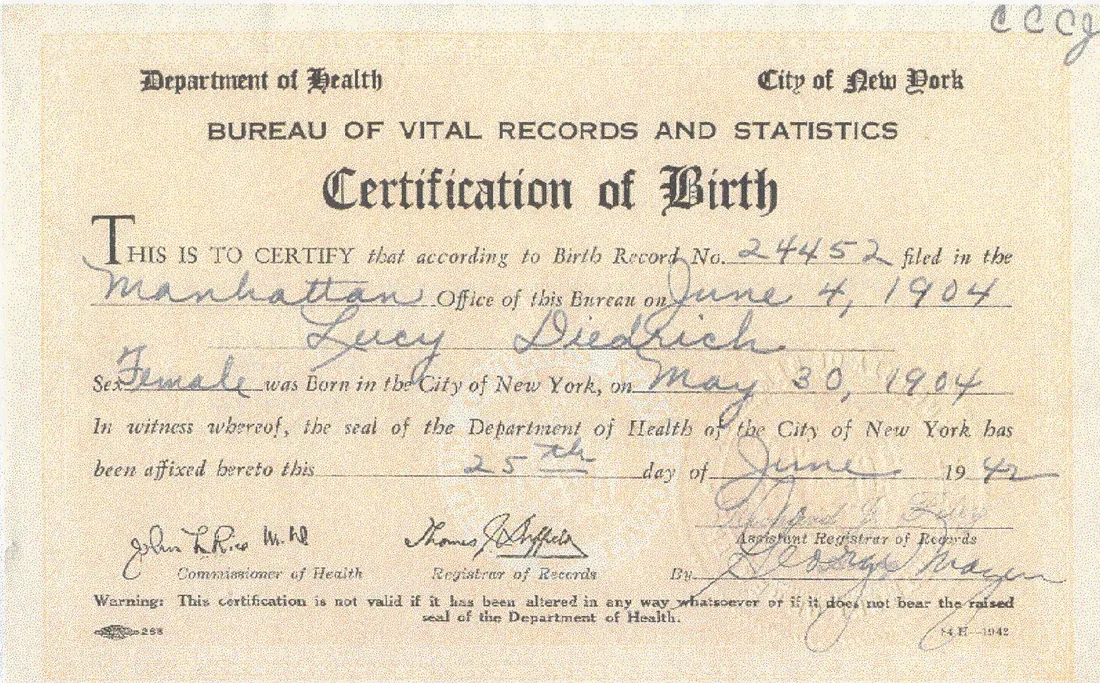
Many Americans first needed proof of age in the late 1930s to claim Social Security, so states issued delayed birth certificates on the strength of affidavits, baptismal records, census entries, and family Bibles. They are real records with real evidence inside, but the stated date is memory written down forty or more years later.
The supporting documents are usually more valuable than the certificate itself, because they name what the family had in hand in 1938: a Bible page, a baptism entry, an insurance policy, a census line. State indexes of delayed certificates exist (New York's runs to births as far back as the 1820s), and a filing can document a birth long before any registration law existed in that state.
Treat the date on it as a claim with a source attached, not as a primary record. Then go find the source it cites.
Which records substitute for a birth certificate?
Work down this ladder until several independent records agree. No single substitute equals a birth certificate. Three that agree within a year, created by people who did not copy each other, will carry a conclusion that one missing certificate never will.
- Baptism or christening entry: closest in time to the birth, and often the only contemporary record.
- Census ages: 1850 was the first US federal census to name every household member. An age gives a birth-year range, and the enumeration date decides that range.
- Marriage record: an exact age, or "of full age", or a parent's consent that proves the person was under 21.
- Death certificate: it names the informant who supplied the personal details, and the birth date on it is only as good as that person's knowledge.
- Military registration: First World War draft cards carry a date of birth stated by the man himself.
- Pension file: Civil War widows' claims often include family Bible pages, affidavits from wedding witnesses, and the birth dates of children.
- Family sources and local records: the Bible in a cousin's attic, school censuses, cemetery registers, obituaries, insurance and fraternal-order records.
Rank them by who knew and when. A baptism recorded within a month by the officiating minister outranks an age given fifty years later by a son-in-law. When two good sources disagree, the disagreement itself is the finding, and resolving it is part of the standard of proof rather than an annoyance to average away.
How do you turn a census age into a birth year?
An age in a census is one number covering a twelve-month window, given by whoever answered the door. Convert it to a range using the enumeration date, then compare ranges across censuses. A person who ages fourteen years between two censuses ten years apart is telling you the ages are estimates.
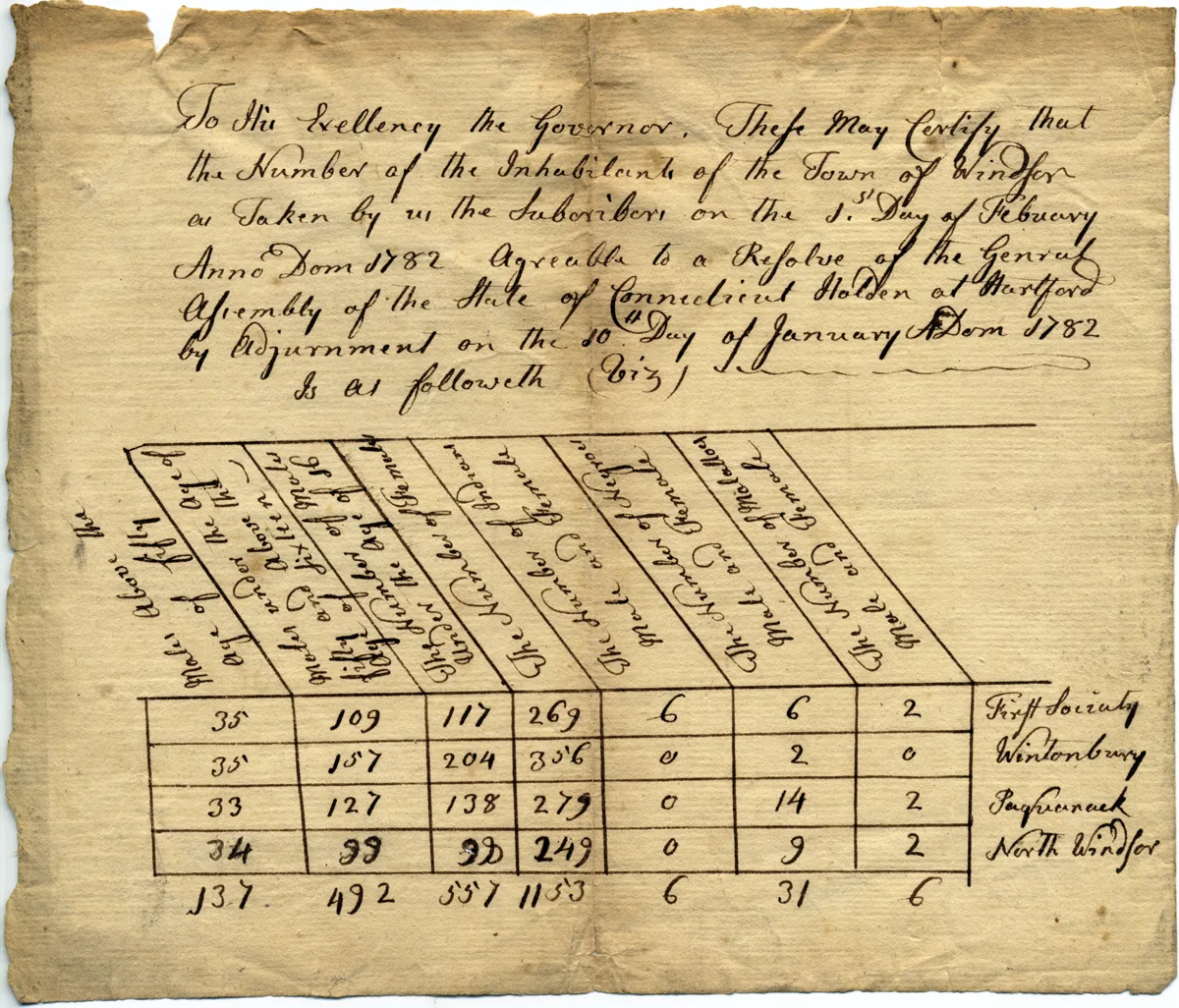
A man aged 34 in a census enumerated in June 1880 was born between June 1845 and June 1846, and that is all the record says. Overlap the ranges from every census he appears in and the intersection is usually a two or three year window, which is enough to order the right certificate or rule out the wrong candidate. Ages also drifted on purpose: to enlist, to marry, to seem younger than a spouse.
This is the point where a wide search pays off, because the ranges only tighten when you have every record. AncestorIQ's Deep Research searches record sets across multiple archives for one person, keeps the citation for every fact it proposes, and flags dates that cannot fit the life you already have. Terms you cannot read in the resulting documents are in our records glossary.