If you want to run a marathon, you train first. If you want to build a house, you pour a foundation. And if you want to trace your family back generations without hitting a wall every other weekend, you prepare before you start clicking.
This is the pattern we see again and again with people who actually finish their trees: the ones who get somewhere aren't the fastest searchers. They're the most prepared. Research is slow work, and there's no shortcut around doing the groundwork first.
Priya Nadkarni, a professional researcher who has spent fifteen years untangling other families' lines, put it plainly: “Everyone wants to jump straight to 1750. They want the dramatic ancestor, the ship manifest, the coat of arms. But the people who get stuck are the ones who never wrote down what they already knew. You can't cross an ocean if you haven't left your own kitchen table.”
That's the heart of it. You can't announce that you're “doing genealogy” and expect the records to line up for you. You have to lay the groundwork first.
Here are five things to do before you start building your tree.
1. Start with what you already know, not what you want to find.
The temptation is to reach for the mystery: the great-grandmother nobody talks about, the surname that changed at Ellis Island. Resist it. Begin with yourself, then your parents, then their parents. Write down every date and place you're already sure of. This isn't busywork; it's the anchor everything else hangs from. A tree built outward from solid ground holds. A tree built around a rumor collapses the moment a record contradicts it.
2. Separate what you know from what you suspect.
Not everything in a family is a fact. Some of it is a story your aunt told at a wedding. Both are worth keeping, but not in the same column. Mark the uncertain things as tentative and move on. “The single most useful habit a beginner can build,” Nadkarni told us, “is being honest about the difference between 'I have a document' and 'I have a feeling.' Tentative isn't failure. It's just accurate.” A value you're unsure of is still worth saving, as long as you know it's unresolved.
3. Keep the source with the claim.
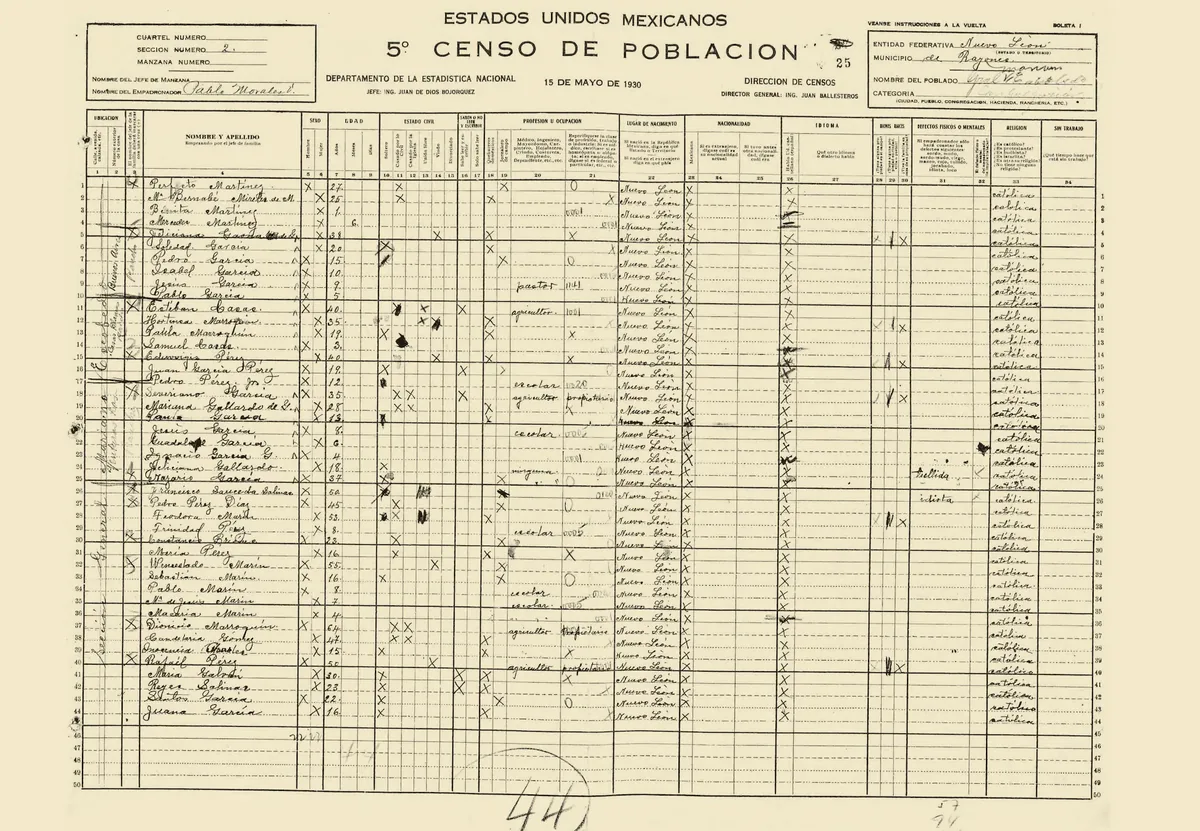
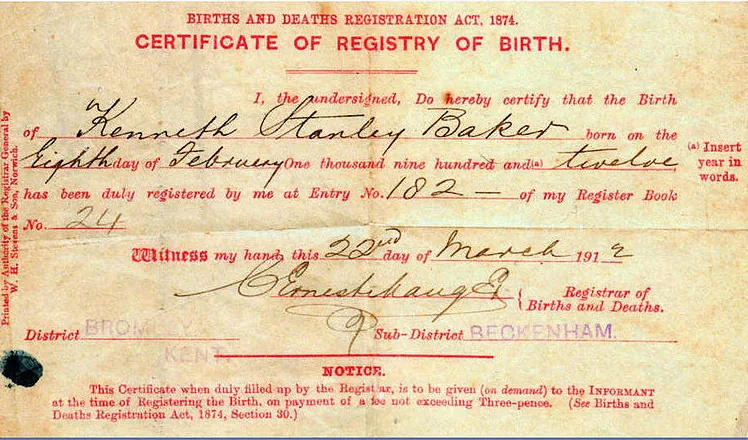
A birth date with no source attached is a guess wearing a costume. Every fact you record should carry the record it came from: the census, the parish register, the headstone photo. Not filed away in a separate folder you'll never open again. Right there, next to the fact. When two sources eventually disagree, and they will, you'll be grateful you can see exactly where each number came from without re-doing a week of work.
4. Expect conflicts, and don't paper over them.
Sooner or later, one record will say 1841 and another will say 1843. The instinct is to pick one and move on. Don't. Surface the disagreement, keep both values with their sources, and decide later when you have more evidence. Margaret Ellison, who reviews other people's research for a living, was blunt about this: “Nine times out of ten, the wall someone hits at 1800 was actually a wrong turn they made at 1900. They forced a conflict closed instead of leaving it open. The tree looked tidy and was completely wrong.” A conflict left honestly open is safer than a conflict resolved by wishful thinking.
5. Decide what “done” looks like before you begin.
A tree is never truly finished, but a person's card can be. Before you start, decide what a well-researched ancestor looks like to you: birth, marriage, death, all sourced, all consistent. That standard is what turns endless searching into steady progress. Without it, every session ends with the vague feeling that there's always one more thing to check. With it, you can look at a card and know it's solid, and turn your attention to the next person with a clear conscience.
The mistake the five things don't cover: trusting a hint over a record.
None of the five things above will save you from the single most common beginner mistake, because it isn't about preparation. It's about what happens the first time a big database hands you a shaky leaf, a suggested record, or a card telling you how many other trees already have this ancestor, and it looks close enough. A hint is a nomination, not a fact. The database is telling you a name and an approximate year lined up with something in its index. It is not telling you that the record actually belongs to your ancestor.
Picture a hint for a birth record: a name, a county, a year within two of what you'd guessed. Click accept without opening the actual image, and the entry goes onto your tree as a birth date. Open the image instead, and sometimes the middle name is wrong, the county is one over from where the family actually lived that decade, or the entry is an index transcription of a page that, read in full, names different parents entirely. None of that shows up on the hint card. It only shows up in the record.
This habit is worth naming early because it's the fastest way to build a tree that looks complete and isn't. A hint queue rewards speed: ten accepted hints in an evening feels like progress. Ten opened records, checked against what you already know about the family, and either confirmed or set aside, is the actual progress. Treat every hint as a lead worth chasing, the same way you'd treat a cousin's tree or a DNA match, and never as something worth accepting on sight.
Choosing a place to build your first tree.
Before any of the five things above matter, you need somewhere to actually put them, and beginners tend to agonize over the wrong criterion. The question people ask is which service has the biggest record collection. The question that actually predicts whether your work survives is different: can you get your data back out, and does a source stay attached to the specific fact it supports, or does it float somewhere else as a general note on the person.
Test both before you commit an evening to a platform. Enter one made-up person with a birth date and a source, then look for the export function. A clean GEDCOM file that opens correctly in a different program means your work is portable if you ever want to switch software or hand it to a professional researcher. A tool that only exports a PDF chart, or nothing at all, is asking you to trust it permanently with facts you haven't verified yet. Then check whether the source field sits on the fact itself, next to the birth date, or gets bundled into one shared notes box for the whole person. The second pattern is exactly what tip three warns against, and no amount of discipline on your end fixes a data model that won't hold a citation where you need it.
What matters far less at the start is the size of the attached record database. It feels like the deciding factor, and mostly it isn't, because a beginner's first several months of research draw almost entirely from things already in hand: birth and marriage certificates in a drawer, an obituary a cousin saved, a family Bible, and free record sites like FamilySearch, whose collections are already enormous and cost nothing. The paid database earns its keep later, once the free and at-hand sources run out and a line stalls on something only a subscription collection holds. Choosing a tool for its record count on day one is a bit like choosing a car for its top speed before you've learned to drive. It matters eventually. It isn't what decides whether the first six months go well.
A realistic first month, and a realistic first year.
The five things above are a discipline, not a checklist you finish in a weekend, and it helps to know what applying them actually looks like on a calendar. A first month spent well usually covers three generations: you, your parents, and your grandparents, each with a birth, a marriage where it applies, and a death or current status, sourced from things you already have access to. Birth certificates, a marriage license copied at a courthouse or ordered online, obituaries, and direct family memory carry almost all of that weight. Finish the first month with six to ten people whose cards meet the standard you set in tip five, and that's a genuinely strong start. It doesn't mean you're behind if you only have four.
The first year looks different, and it should. By the twelfth month, a steady researcher has usually pushed one or two lines back to great-great-grandparents, hit at least one wall where a record type simply doesn't exist for that place and year, and built a research log with nearly as many dead ends recorded as live leads. That's not a sign of doing it wrong. A tree with thirty or forty fully sourced people and one honest, well-documented brick wall after a year is in far better shape than a tree with two hundred names and no sources behind any of them. The first kind of tree is slower to look at and faster to actually finish, because there's nothing left to go back and re-check.
Knowing this ahead of time changes how the five things feel while you're doing them. Writing down what you already know isn't a delay before the real research starts. It's the first month. Keeping a source with every claim isn't overhead you'll get to eventually. It's the habit that turns a brick wall a year from now into a known, documented one instead of a guess you'll have to redo.
Good genealogy doesn't happen by accident. It's built on preparation: knowing what you have, being honest about what you don't, and keeping your evidence close. If you're ready to start building a tree that holds up, this is a good place to begin.